Guangzhou Automobile Group Co (GAC) is scaling back its North American ambitions, opting instead to prioritize regions with more favorable trade conditions. The Chinese automaker, which produces nearly 2 million vehicles annually, has closed its Los Angeles design office to navigate new tariff threats from the United States.
GAC maintains a presence in global markets including Australia, New Zealand, and Africa. However, the company faces a challenging domestic environment. Reports indicate the firm is on track to post a financial loss this year due to a hyper-competitive Chinese market and weak consumer confidence. Consequently, the company is aggressively pursuing international exports to utilize its excess production capacity.
The company reported 223,100 units exported in the first 10 months of 2026, a 122% increase compared to the previous year. Sales of "new energy" vehicles—a category encompassing all-electric cars and plug-in hybrids—topped 500,000 units during that same period. This represents a 59% increase over 2025.
Product strategy heavily favors left-hand drive markets. The XT80 SUV, which utilizes the company's HEV-plus hybrid platform, is scheduled to launch in the United Arab Emirates in January 2027. A release in right-hand drive markets like Australia is not expected until 2028. Additionally, the company produces the SSR, marketed as the world's first mass-produced all-electric supercar, though it remains limited to left-hand drive configurations.
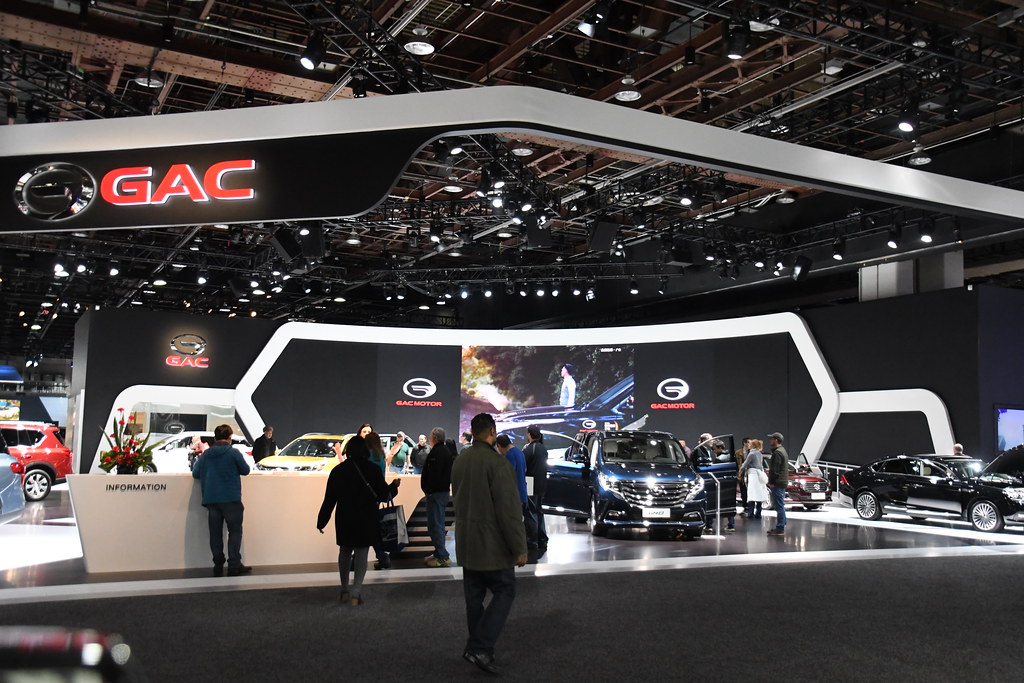
GAC's historical reliance on manufacturing partnerships with Honda and Toyota remains a complex element of its business model. While these joint ventures provided essential technical expertise, GAC now competes directly against its Japanese partners in domestic sales. At recent exhibitions, GAC’s own brand booths prominently featured electric vehicles, while the adjacent booths for its Japanese partners focused primarily on hybrid and internal combustion engine models.
This shift in strategy highlights how geopolitical trade barriers and rising global oil prices influence the international electric vehicle market. Countries without domestic oil resources, such as Jordan, are seeing rapid adoption of EVs. New car purchases in that nation now reach approximately 85% electric.